How to check a probe thermometer (with a free log)
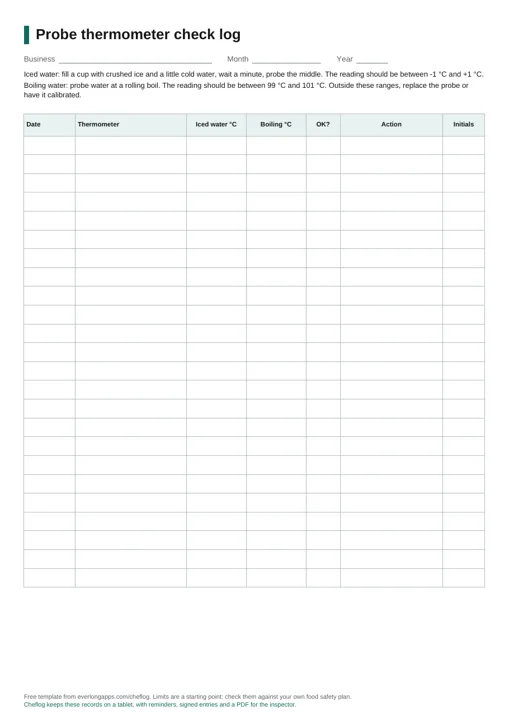
The iced water test
- Fill a cup with crushed ice and top it up with a little cold water.
- Wait about a minute so the water is as cold as the ice.
- Put the probe in the middle, not touching the cup, and wait until the reading settles.
- Read it: between -1 °C and +1 °C is a pass.
The boiling water test
- Bring water to a rolling boil.
- Put the probe in away from the bottom and sides of the pan, and wait until the reading settles.
- Read it: between 99 °C and 101 °C is a pass.
If the probe fails
Replace it, or return it to the manufacturer to be calibrated. Then think about the readings you took since the last good check: if they were close to a limit, they may not have been right.
How often
| Where | How often | Source |
|---|---|---|
| England, Wales, Northern Ireland | As the maker says, otherwise regularly, for example monthly | Safer food, better business, Prove it |
| Scotland | Probes monthly, the display unit calibrated yearly | CookSafe |
| France | At least once a year, or against a reference thermometer | GBPH for fast food |
Clean and disinfect the probe before and after every use, and keep a spare: a kitchen without a working probe can't do its checks.
Questions
How often should a probe thermometer be calibrated?
Follow the manufacturer's instructions. If there are none, the FSA suggests checking it regularly, for example once a month.
What should a probe read in iced water?
Between -1 °C and +1 °C.
What should a probe read in boiling water?
Between 99 °C and 101 °C. At high altitude water boils at a lower temperature.
Or let Cheflog keep this record for you
Cheflog is a food safety app for the kitchen tablet. It reminds you what is due, takes the reading with big keys, asks for the corrective action when a value is out of range and keeps signed records an inspector can read. Try it free for 30 days, then pay once (€49.99), no subscription.
See how Cheflog worksSources
Sources checked on 6 November 2026.
This page is general information, not legal advice. Limits in the templates are a starting point: check them against your own food safety plan and ask your local authority if you are unsure. Cheflog and Everlong are not connected to the Food Standards Agency, Food Standards Scotland or any other authority, and nothing here is approved by them.